Studying the works of famous artists is an effective way to develop creative skills. By examining technique, composition, and process, artists can understand principles of visual storytelling, design, and expression. Learning from masters provides insight into problem-solving, experimentation, and artistic decision-making, which can be applied to personal projects. This guide explains methods for studying and learning from famous works of art.
Choosing Artists to Study
Start by selecting artists whose work aligns with your interests. Consider:
- Time periods: Renaissance, Impressionism, Modernism, Contemporary
- Mediums: Painting, drawing, digital illustration, sculpture
- Styles: Realism, abstract, minimalism, or mixed media
Focus on one or two artists at a time to study thoroughly.
Observing Technique
Examine brushwork, line quality, and tool use. Notice how strokes create form, texture, and depth. Observe how artists handle layering, shading, or blending. Analyzing technique helps understand how visual effects are achieved.
Understanding Composition
Composition organizes elements to guide the viewer’s eye. Study:
- Focal points and emphasis
- Balance between foreground, middle ground, and background
- Use of symmetry or asymmetry
- Placement of lines, shapes, and objects
Understanding composition informs personal layout decisions and strengthens visual storytelling.
Studying Color Use
Color influences mood, contrast, and depth. Observe how artists combine colors, handle light and shadow, and create harmony or tension. Take note of palettes and transitions, and practice applying similar principles in your work.
Analyzing Subject Matter
Examine the themes and messages in famous works. Consider what the artist aims to communicate through subject choice, pose, or symbolism. Understanding subject matter informs narrative development in your projects.
Exploring Style and Evolution
Many artists evolve over time. Study periods in their career to see changes in technique, palette, or approach. Recognizing development patterns encourages adaptability and experimentation in your own work.
Reproducing Works for Study
Copying master works is a traditional study method. Steps include:
- Select a piece suitable for your skill level
- Sketch or trace basic shapes and structure
- Focus on technique, color, and composition
- Compare with the original to identify differences
This practice develops technical understanding and observational skills.
Combining Multiple Influences
Studying multiple artists encourages synthesis. Identify techniques, color schemes, or compositional strategies from different sources. Experiment with combining these influences while maintaining originality.
Learning from Process
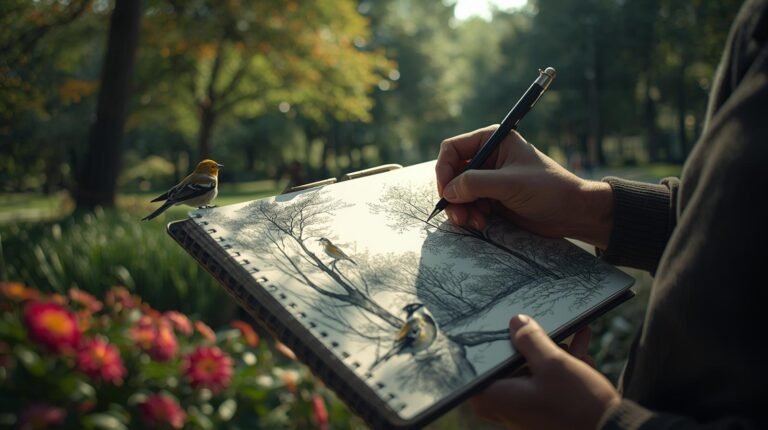
Many artists document their process through sketches, notes, or tutorials. Studying how works were created reveals decision-making, problem-solving, and experimentation strategies. Applying similar workflows improves efficiency and insight.
Observing Mistakes and Corrections
Masters often correct mistakes or adjust compositions. Examining revisions or underdrawings provides insight into iterative creative processes. Learning how to recognize and address errors informs personal projects.
Visiting Museums and Galleries
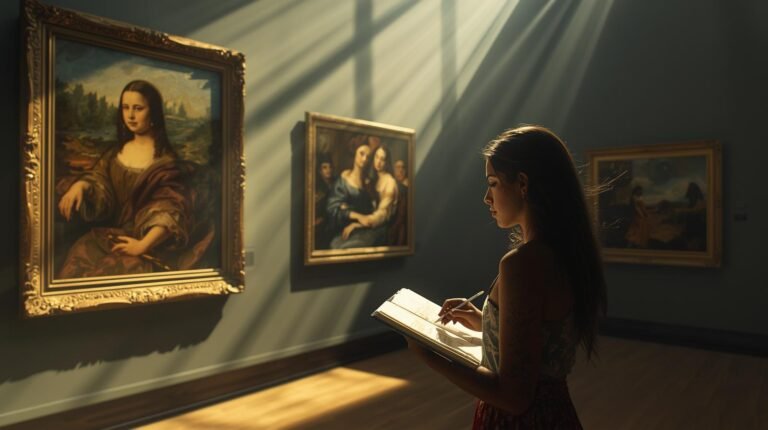
Physical observation in museums allows detailed study of scale, texture, and depth. Lighting and materiality become more apparent in person than in photographs. Analyze techniques and compositions on site and take notes for reference.
Using Digital Resources
Online galleries, video tutorials, and high-resolution images provide access to global artwork. Use digital tools to zoom, analyze layers, and experiment virtually. Digital access complements physical study and expands resources.
Applying Lessons to Personal Work
Translate observations into your projects:
- Adapt techniques in new compositions
- Experiment with color combinations inspired by masters
- Incorporate structural or compositional strategies
- Reflect on the artistic process and decision-making
Application ensures learning is practical and creative.
Avoiding Direct Copying
While studying masters is valuable, maintain originality. Use learned techniques as guidance, not replication. Reinterpret forms, colors, and compositions to align with personal style and project goals.
Practicing Analysis Exercises
- Select a painting and analyze its composition step by step.
- Recreate a section of a work focusing on brush strokes or color.
- Compare two works from different artists to identify contrasting approaches.
- Reflect on how elements observed can be integrated into your project.
Regular exercises reinforce observation and understanding.
Integrating Historical Context
Understanding the historical, cultural, or social context of a work enhances comprehension. Consider the period, materials available, and audience expectations. Contextual study enriches interpretation and informs creative choices.
Reviewing and Reflecting
After applying lessons, review personal work. Assess how study influenced technique, composition, or color. Reflection identifies strengths and areas for improvement, allowing continuous growth.
Final Thoughts
Learning from famous artists’ works provides practical guidance for technical skill, compositional planning, and creative decision-making. Observing, reproducing, analyzing, and reflecting on masterworks strengthens artistic capability. By studying technique, color, subject matter, style, and process, artists gain tools to develop original and structured creative projects. Integrating insights while maintaining personal expression ensures a productive and informed creative journey.
About the Author